Write a household rule.
Build a realistic rhythm for prayer, meals, work, rest, responsibilities, and a short weekly household review.
A Guide to the Christian Way of Living
A complete practical guide to shaping a Christian home around prayer, food, family, work, hospitality, stewardship, the seasons, and care for people whose strength changes.

The complete Christian household is not a household that does everything.Brother Anselm
Christian household life is not built from isolated tips. It is formed by a faithful order that joins worship to ordinary work.
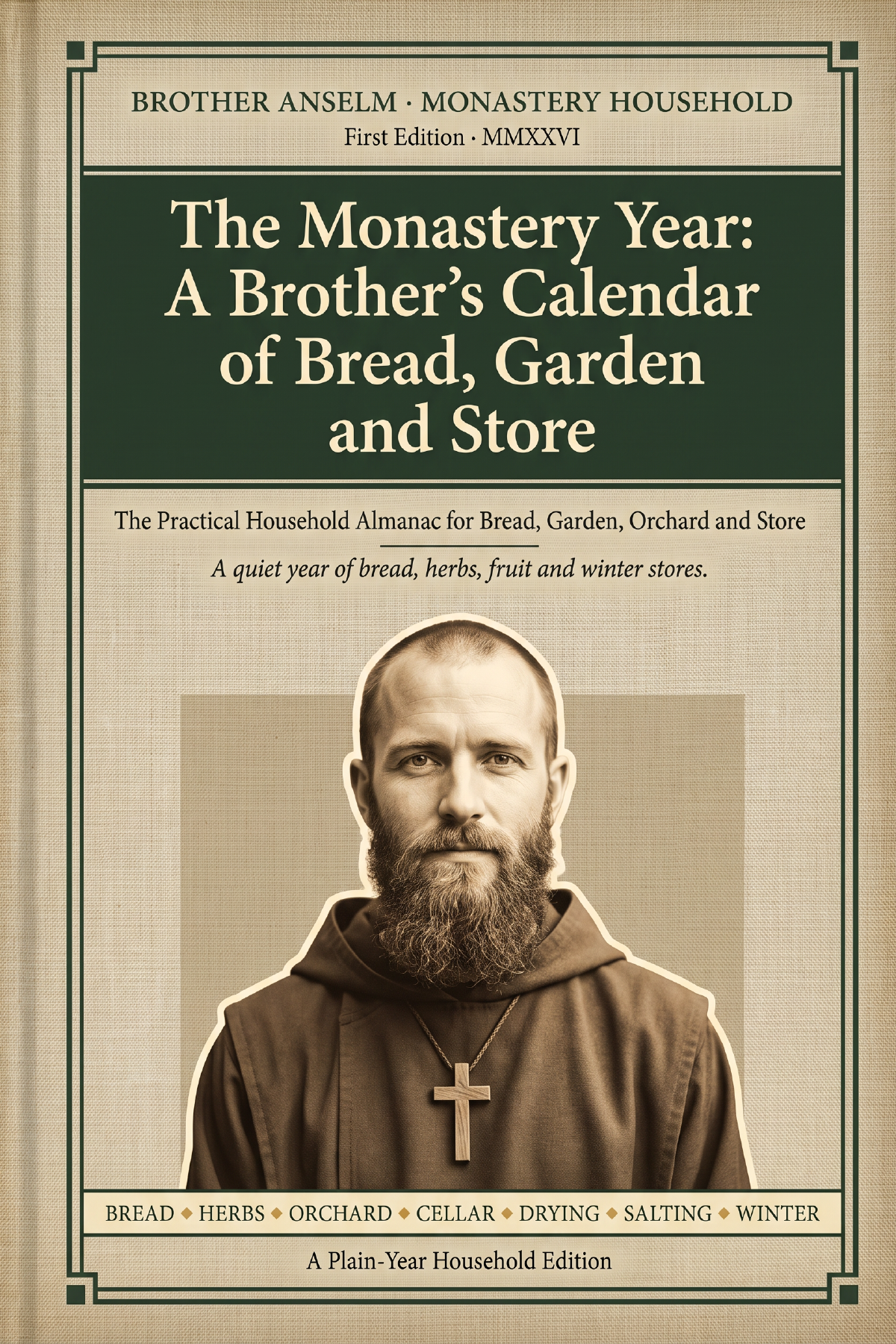
The Complete Christian Household brings prayer, meals, work, rest, money, hospitality, garden, stores, and the church year into one usable pattern. It is written for real households: families, single adults, older readers, caregivers, and homes whose time, money, or strength is limited.
The book moves from first principles into daily practice. It helps you write a household rule, order the week, plan simple meals, bake dependable bread, grow and keep food, care for tools and clothing, welcome guests, and prepare for disruptions without fear.
Throughout the guide, illustrated Household Plates make practical ideas visible. The final almanac and twelve appendices turn the larger vision into records, checklists, menus, inventories, and seasonal work you can actually use.
Instant PDF. 880 pages. 158 chapters in 14 parts.
Explore the complete guideThe difference is not perfection. It is whether the important things have a known place and a workable rhythm.
Reaction
Faithfulness
Fourteen parts, 158 chapters, a conclusion, and twelve practical appendices.
Build a realistic rhythm for prayer, meals, work, rest, responsibilities, and a short weekly household review.
Let Advent, Christmas, Lent, Easter, Pentecost, ordinary weeks, Sundays, fasts, and feasts shape the life of the home.
Understand bread, grain, oil, fruit, herbs, meat, fish, fasting, feasting, generosity, and gratitude without pretending the ancient world was modern.
Plan simple menus, soups, grain and legume meals, work-day food, Sunday food, and a kitchen rhythm that does not exhaust the cook.
Use weight, temperature, fermentation, pan choice, cooling, and notes to make a reliable daily loaf and put sound leftovers to work.
Choose crops by actual household use, order beds, raise seedlings, tend soil, water wisely, manage weeds, and share the harvest.
Grow and dry culinary herbs, build a useful tea shelf, and respect clear boundaries between household food and medical treatment.
Give food a destination, manage pantry and cellar conditions, rotate stores, dry and freeze safely, and avoid false confidence around preservation.
Distinguish thrift from hoarding, plan purchases, keep useful tools in service, mend clothing, reduce waste, and make room for giving.
Begin with familiar food and water for three days, then build communication, light, warmth, records, and mutual aid around local guidance.
Change burdens while keeping purpose through age, illness, disability, grief, caregiving, rest, and dignified participation.
Move month by month through prayer, food, garden, stores, repairs, hospitality, and regional or hemisphere differences.
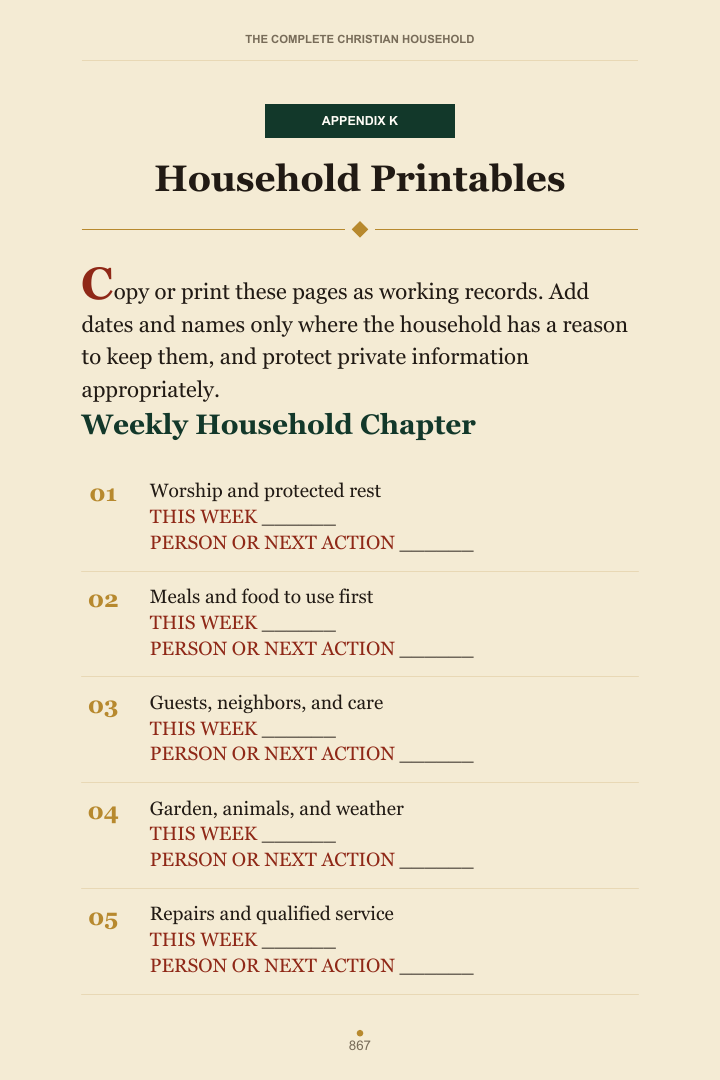
See a practical framework, a full-page illustration, a bread formula, and one of the printable household worksheets.
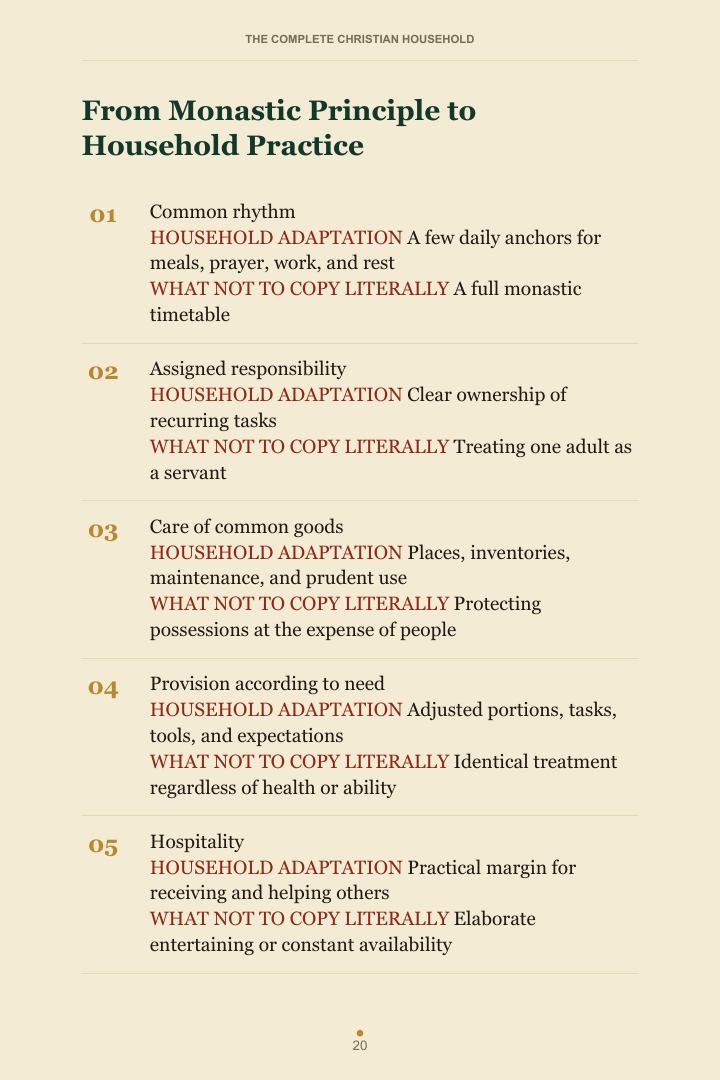
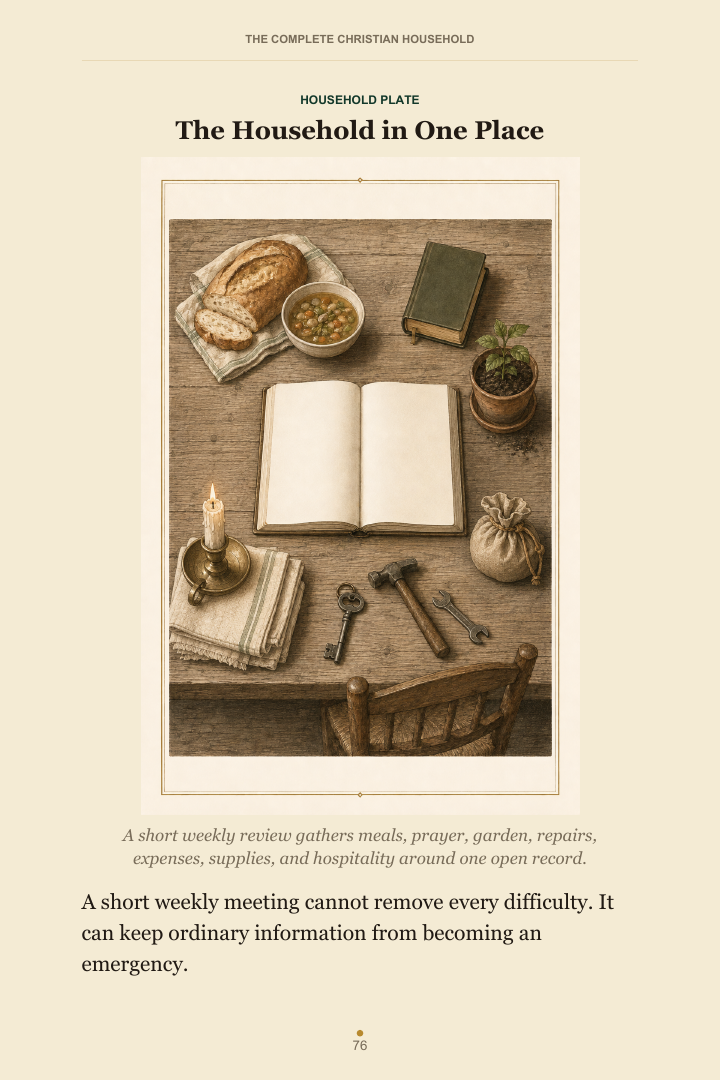
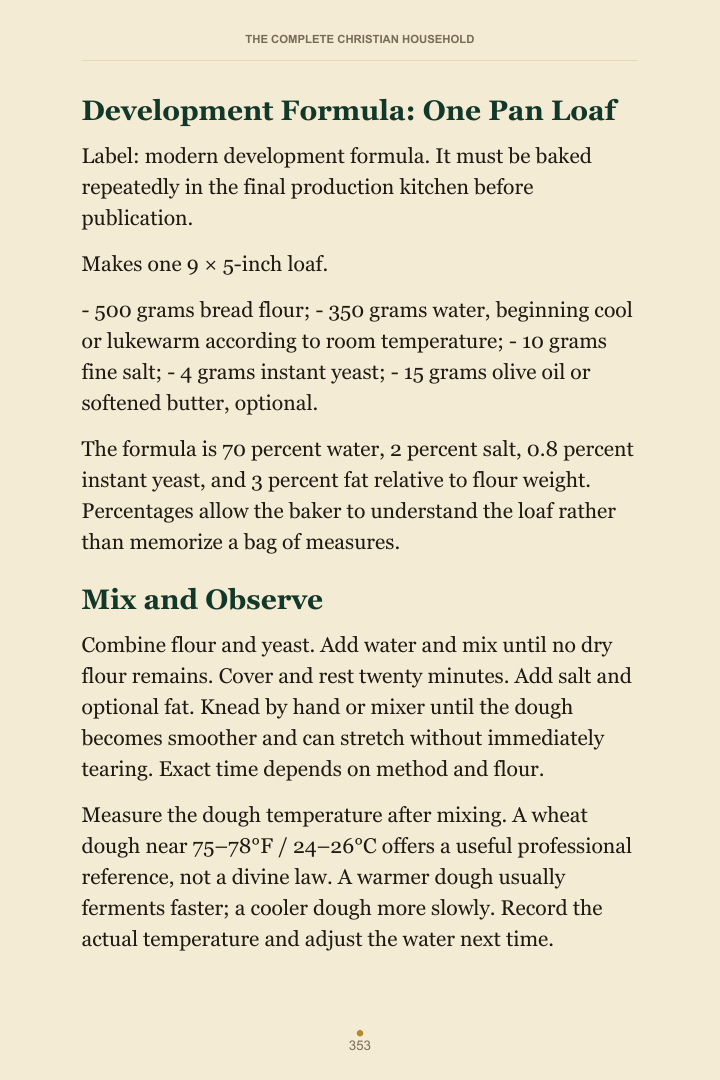
A calm authorial voice for practical Christian household life.
Brother Anselm is the authorial voice of The Complete Christian Household: plain-spoken, careful, and concerned with the daily work by which a home serves God and neighbor.
The guide does not present invented memories as history. It distinguishes biblical reflection, historical Christian practice, modern household guidance, and current safety boundaries so that the reader can tell what kind of claim is being made.
Its purpose is not to imitate a monastery or to make every household look alike. It is to help Christians build a truthful, merciful order suited to their own church, place, people, resources, and season of life.
Plain answers before you order.
You receive an illustrated 880-page PDF containing 158 chapters in fourteen parts, followed by a conclusion and twelve practical appendices. Access is delivered by Gumroad after purchase.
No. It is written for Christians across traditions. Where Catholic, Orthodox, Anglican, and Protestant practices differ, the guide names the difference and directs the reader to the discipline of his or her own church.
No. Food and bread are important parts of the book, but the larger subject is the complete Christian household. It includes simple preparations and practical food methods alongside prayer, family life, work, hospitality, stewardship, garden, preparedness, age, illness, and the seasons.
No. The principles are adapted for different homes, climates, household sizes, budgets, bodies, and levels of experience. Use the parts that fit your actual place and season of life.
No. It is a household guide, not medical, legal, financial, electrical, structural, or emergency-management advice. It repeatedly marks safety boundaries and directs readers to qualified professionals and current local guidance where needed.
The purchase is covered by a seven-day refund period. Use the support email shown on your Gumroad receipt if you need help with access or a refund request.
The Complete Christian Household
Bring prayer, food, family, work, garden, hospitality, stewardship, and the seasons into one practical Christian rule of life.
The Complete Christian Household · $29
Get the guideTHE COMPLETE CHRISTIAN HOUSEHOLD
Prayer, meals, work, hospitality, garden, stores, rest, and the Christian year—gathered into one practical, illustrated household guide.
GET THE COMPLETE GUIDE · $29 SEE WHAT'S INSIDE →